
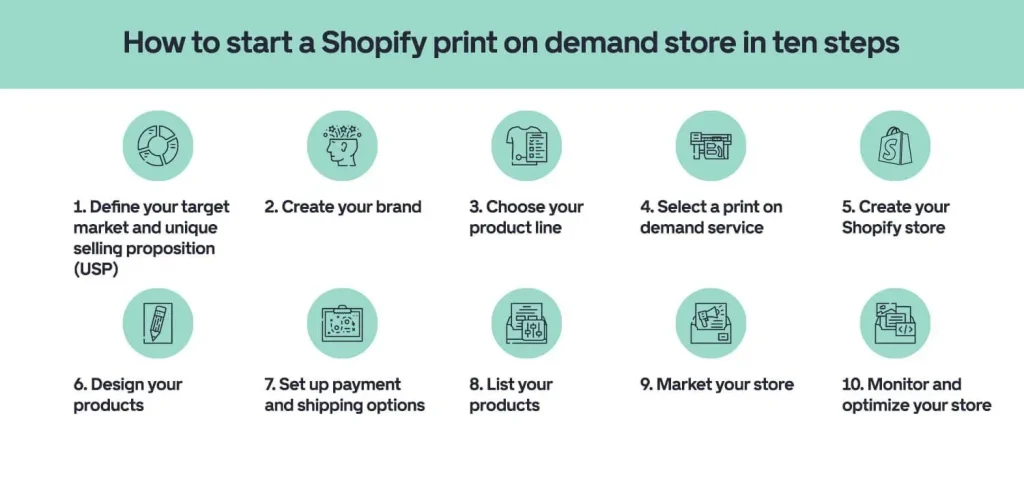
If you’re ready to start a print on demand store, you can turn your designs into a scalable online business without the risk of holding inventory. This approach lets you bring your designs to life on apparel, mugs, phone cases, and home décor while you explore POD store ideas and a repeatable process. A disciplined, step-by-step print on demand plan helps you move from concept to first sale with confidence. For beginners, print on demand for beginners is a practical path, reinforced by print on demand store setup, guiding platform choices, pricing, and supplier selection. With reliable printing partners and a focused catalog, you can start a POD business and build a scalable operation that grows with experience.
Beyond the roadmap, the idea can be viewed as an inventory-free ecommerce model that uses on-demand printing to fulfill orders only after purchase. You might describe it as a custom merch business, a design-to-product storefront, or a digital shop that relies on fulfillment partners. Key components include choosing a niche, partnering with reliable print providers, and crafting compelling visuals and product copy to drive conversions. By framing the venture with related topics like product sourcing, logistics, marketing, and customer experience, you leverage LSI principles to strengthen relevance and discovery. The focus remains on iterative testing, feedback loops, and scalable processes that grow your brand without stocking heavy inventories.
start a print on demand store: A practical, step-by-step guide for beginners
Starting a print on demand store is a practical way to turn ideas into a scalable online business without holding inventory. By selling products such as t-shirts, mugs, phone cases, and home décor, you can test designs quickly and expand as demand grows.
This guide introduces a step-by-step print on demand plan tailored for beginners. It covers niche selection, validation, platform choice, supplier options, pricing, and growth tactics, all framed around a low-risk, repeatable process. Along the way, you’ll learn to map your creative vision to a workable store setup and a clear path to the first sale.
As you progress, apply the concepts of print on demand store setup to ensure your listings are discoverable, your production is reliable, and your customer experience is consistent. The emphasis is on learning by doing, iterating based on data, and building a repeatable system you can improve over time.
Choosing the right platform and business model for your POD store
Choosing the right platform is foundational. Decide between standalone ecommerce platforms (like Shopify or WooCommerce) and marketplaces (such as Etsy or Redbubble). Each option affects branding control, pricing strategies, and data ownership, so weigh your technical comfort, budget, and goals.
A self-hosted store offers greater control over the user experience and analytics, aligning well with a long-term plan to start a POD business. Marketplaces can provide faster initial traffic and validation, which is helpful for beginners testing ideas. In both paths, plan your store’s structure, from product categories to checkout flows, with a step-by-step print on demand plan in mind.
When you research, look for platform-specific considerations like integration with your printing partners and how easy it is to scale. Remember to connect your platform choice to your niche and customer messaging, ensuring your pages reflect the keywords people search for during their journey to buy.
From idea to catalog: building your first product lineup with POD store ideas
A strong catalog begins with focused POD store ideas that align with your niche. Start with a small, curated set of products (such as apparel, mugs, and tote bags) to keep operations manageable while you learn what resonates.
Design decisions should map to the printing method and product types you plan to offer. Work with designers or use template tools to create on-brand motifs and mockups that look realistic in photos. Incorporate descriptive, SEO-friendly copy that includes LSI terms related to POD, such as print on demand store setup concepts and other relevant phrases.
As you develop your catalog, document your process so you can replicate it. A clear, repeatable approach to ideation, validation, and product launch helps you build momentum and reduces guesswork as you scale your store.
Pricing, margins, and profitability: mastering print on demand for beginners
Pricing combines cost, perceived value, and competition. Start by calculating landed costs—printing, fulfillment, platform fees, and packaging—and then determine a healthy profit margin aligned with your audience and budget.
A common target for apparel is a 40–60% gross margin, but adjust based on your niche, shipping strategies (such as bundled pricing or free shipping thresholds), and marketing spend. Transparent pricing builds trust and minimizes post-purchase friction, while periodic promotions can help you test price sensitivity without eroding baseline value.
For beginners, it helps to run small tests: monitor how changes in price, bundling, or shipping options impact conversions, average order value, and return rates. Use these insights to optimize your product mix and pricing strategy within a step-by-step plan toward sustainable profitability.
SEO, branding, and launch: how to start a POD business the right way
A successful launch relies on strong branding and search-optimized product pages. Create a cohesive brand story, consistent visuals, and category-level navigation that helps customers explore by niche, not just by product.
Incorporate search-friendly titles, meta tags, and descriptive bullet points that weave the focus keyword start a print on demand store naturally, along with related terms like print on demand store setup and start a POD business. Use high-quality images, fast loading times, and trust signals such as reviews and guarantees to boost conversions.
Post-launch, track performance across channels and refine your messaging to stay aligned with buyer intent. A disciplined approach to content, optimization, and continuous testing—guided by a step-by-step plan—will help you grow a recognizable brand and a thriving POD store.
Frequently Asked Questions
How do I start a print on demand store?
To start a print on demand store, begin by defining a focused niche and audience. Validate demand with simple market research and keyword checks to ensure there’s interest. Choose a platform and model that fits your goals (Shopify/WooCommerce vs. marketplaces) and select reliable printing partners. Create on-brand designs and SEO-friendly product pages, and set pricing with healthy margins. Plan a launch, establish fulfillment and customer service processes, and use analytics to measure results and optimize. This approach aligns with the print on demand store setup you’d follow in a step-by-step plan.
What is a step-by-step print on demand plan for beginners?
A step-by-step print on demand plan for beginners starts with defining a niche and audience, then validating demand with market research and simple keyword checks. Next, pick a platform (Shopify/WooCommerce or a marketplace) and choose reliable printing partners to build your catalog. Create on-brand designs, draft SEO-friendly product pages, and set pricing with healthy margins. Finally, launch with a simple marketing plan, establish fulfillment and support, and use data to measure performance and iterate.
Which platform and printing partners should I choose for my print on demand store setup?
For a print on demand store setup, start by assessing platform options (Shopify, WooCommerce, Etsy, or other marketplaces) based on your tech comfort, budget, and growth goals. Look for printing partners that integrate with your chosen platform, offer a broad product catalog, reliable print quality, and transparent pricing. Order samples to check color accuracy and feel, and start with a small, focused catalog to keep operations simple. Plan for fulfillment times, returns, and customer support, and ensure the partner can scale with your store as you grow.
How can I generate POD store ideas and validate my niche?
Brainstorm POD store ideas by focusing on your interests and passions—these are fertile grounds for POD store ideas. Then validate demand with competitive analysis, Google Trends, keyword research, and audience insights to assess interest and seasonality. Narrow to a specific niche and craft messaging and product ideas around it, using topics that resonate with your target buyers. Include content that aligns with terms like print on demand for beginners and start a POD business to strengthen SEO relevance.
What pricing and margins work for a beginner-friendly print on demand business?
Price by calculating landed cost (printing, fulfillment, platform fees, packaging) and target a healthy gross margin (roughly 40-60% for apparel and similar items). Decide whether to fold shipping into product prices or show it separately, and test different price points and promotions to balance sales velocity with profitability. Maintain transparent pricing to build trust and support sustainable growth in your beginner-friendly print on demand business.
| Step | Topic / Focus | Key Points |
|---|---|---|
| Why POD works | Model overview |
|
| 1 | Define your niche and audience |
|
| 2 | Validate idea with market research |
|
| 3 | Choose platform and business model |
|
| 4 | Printing partners and product catalog |
|
| 5 | Designs and product ideas |
|
| 6 | Price and margins |
|
| 7 | SEO and conversion-friendly pages |
|
| 8 | Launch and initial marketing plan |
|
| 9 | Fulfillment and customer service |
|
| 10 | Measure, learn, and optimize |
|
| Conclusion | Summary |
|
Summary
Conclusion paragraph placeholder